
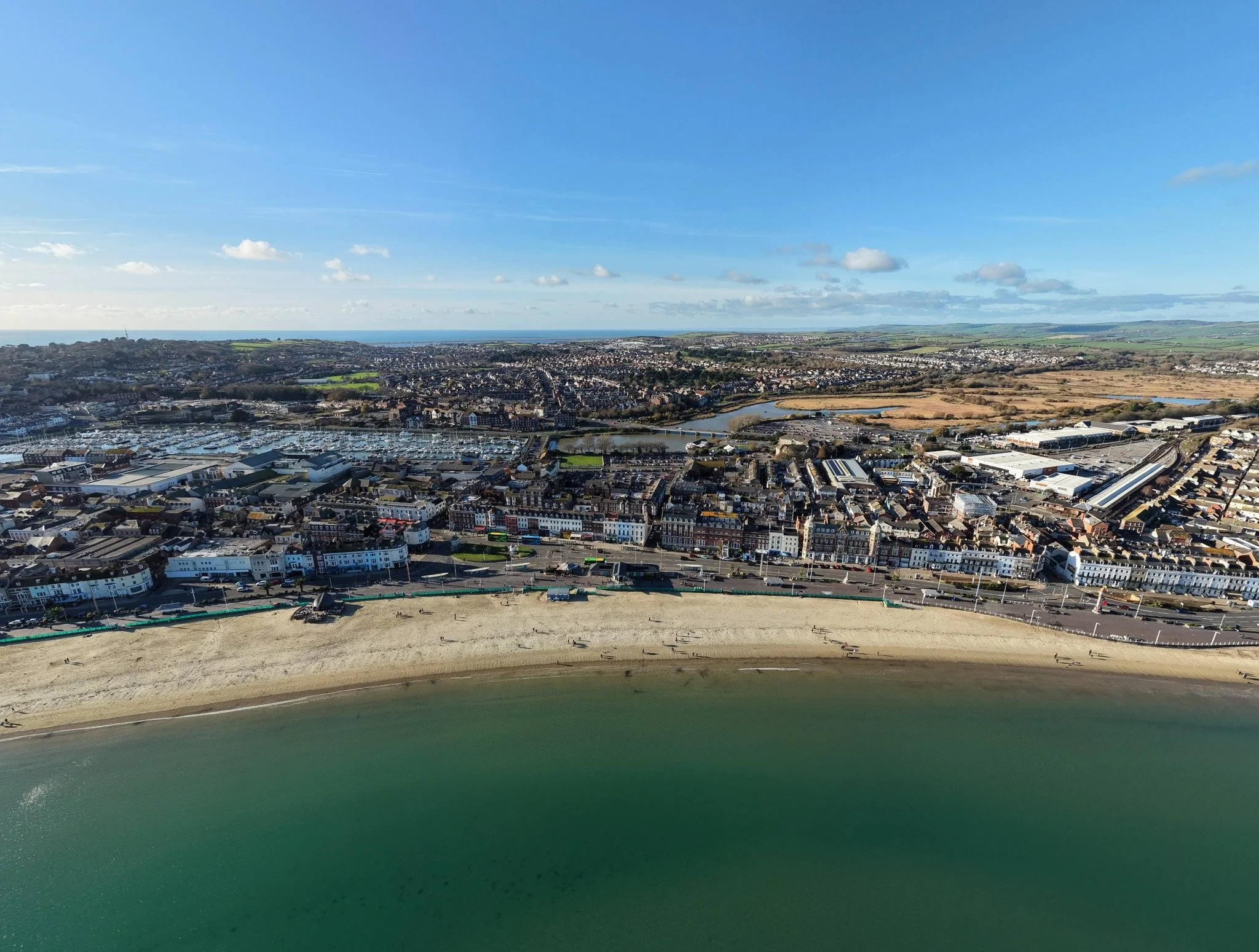
Drone Photography Roof Inspections
Weymouth, Portland, Dorchester & West Dorset
Protect your property with fast, accurate, and safe roof inspections using professional drone photography. Our advanced aerial technology allows us to capture high-resolution images and detailed video footage of your roof without the need for ladders, scaffolding, or unnecessary risk.
Safer. Smarter. More Efficient
Traditional roof inspections can be time-consuming, costly, and potentially dangerous. With drone photography, we can:
Access hard-to-reach or steep roof areas
Identify damage, leaks, missing shingles, and structural concerns
Capture detailed images for insurance claims
Provide clear visual reports for maintenance planning
Reduce inspection time and disruption
Ideal for Residential & Commercial Properties
Whether you own a home, manage rental properties, or oversee a commercial building, drone roof inspections offer a modern, cost-effective solution. We provide comprehensive visual documentation so you can make informed decisions about repairs, replacements, or preventative maintenance.
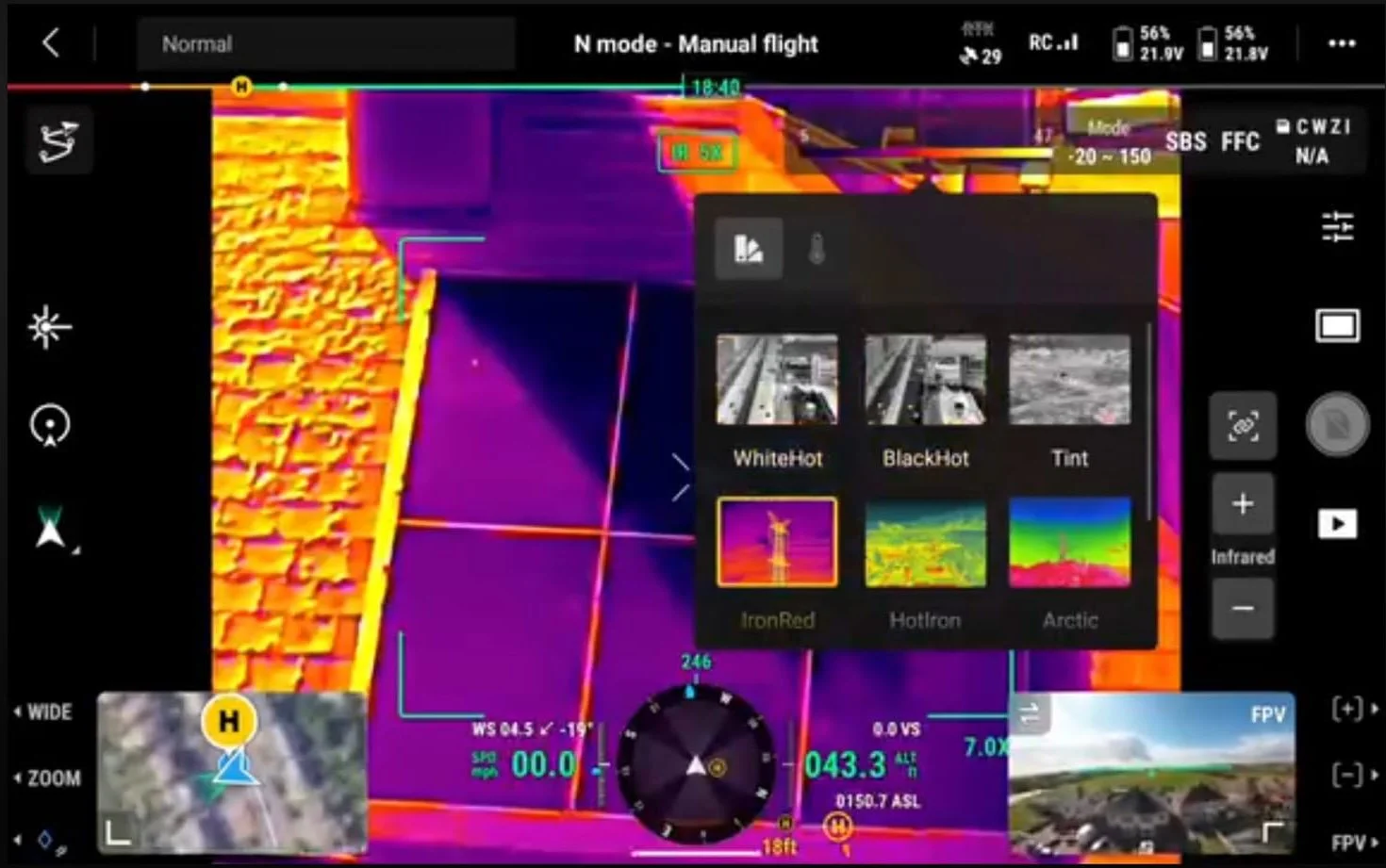
Thermal Camera:
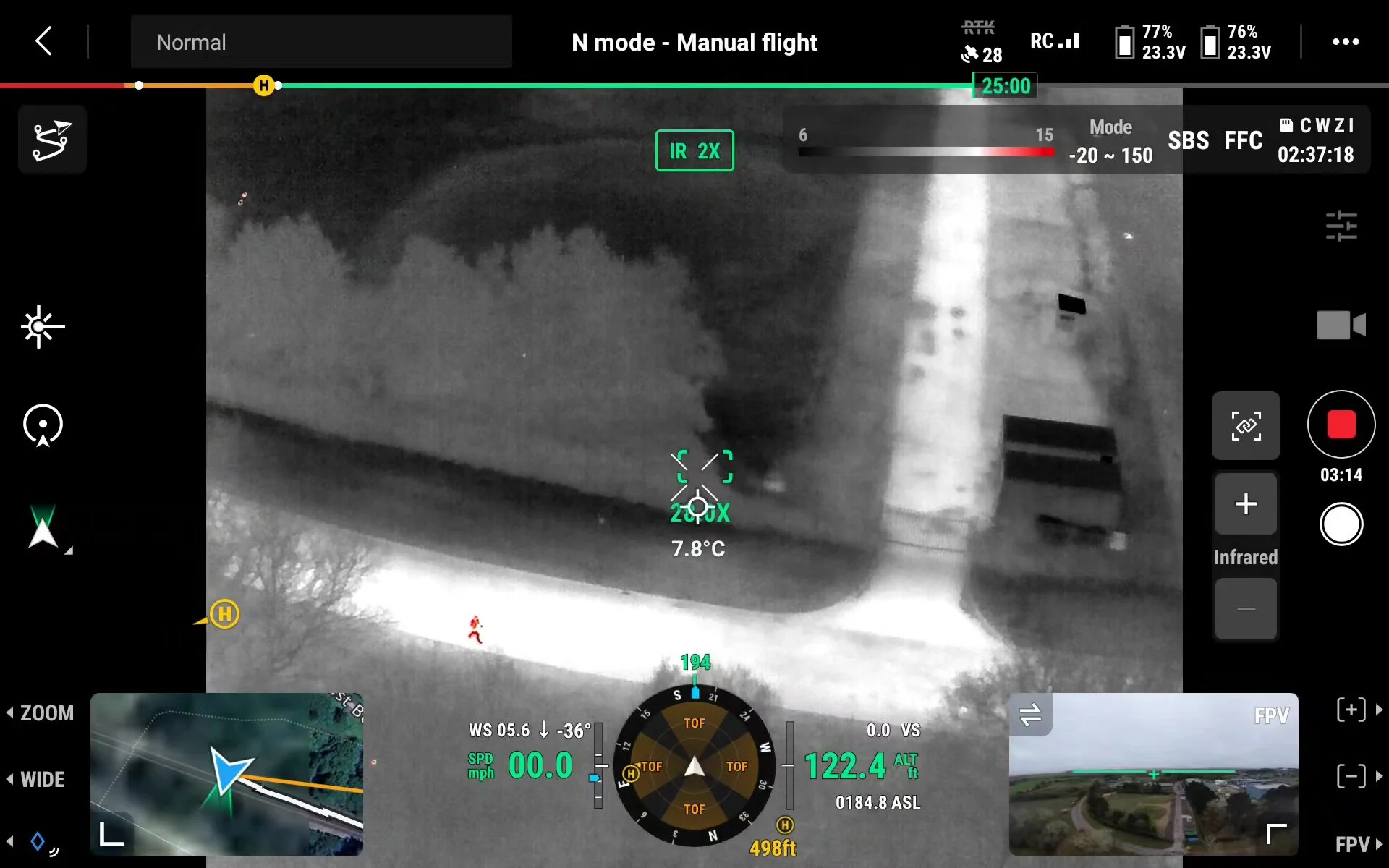
Detecting heat signatures in search and rescue or inspection.
Laser Rangefinder:
Pinpoints objects up to 1,200m away, providing precise coordinates.
Smart Track:
Identifies and follows moving targets (people, animals) with auto-zoom.
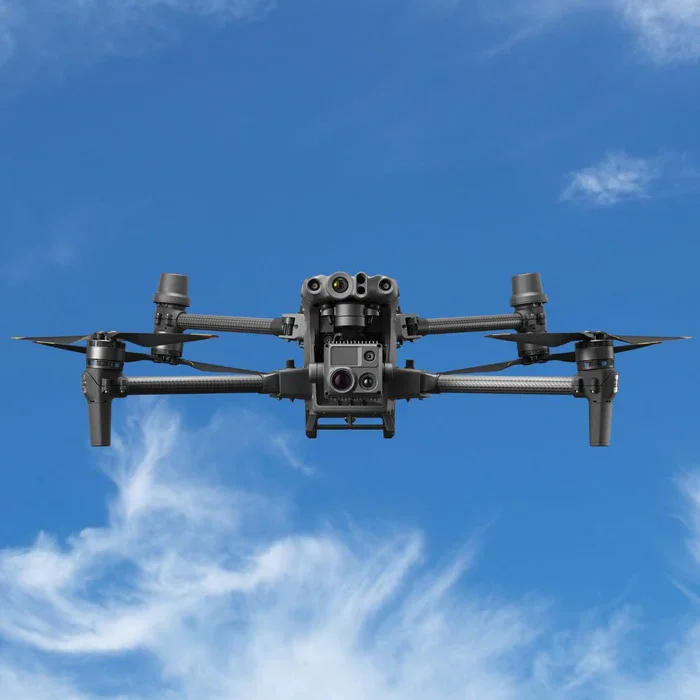
New - DJI Matrice 30T
Capture stunning aerial visuals with a powerful multi-sensor drone system, including zoom, wide-angle, thermal imaging & laser precision
Reveal hidden issues instantly with advanced thermal technology—ideal for inspections and surveys
Get crystal-clear detail with up to 200x zoom and professional 4K imagery
Cover more ground in less time with up to 41 minutes of flight per mission
Achieve pinpoint accuracy with RTK positioning for reliable mapping and reporting
Ready for any environment with a rugged, weather-resistant design
Rapid deployment ensures we’re on-site, airborne, and delivering results fast
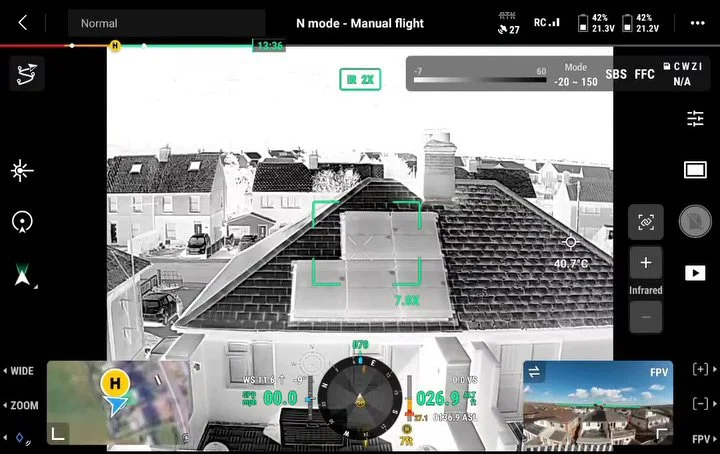
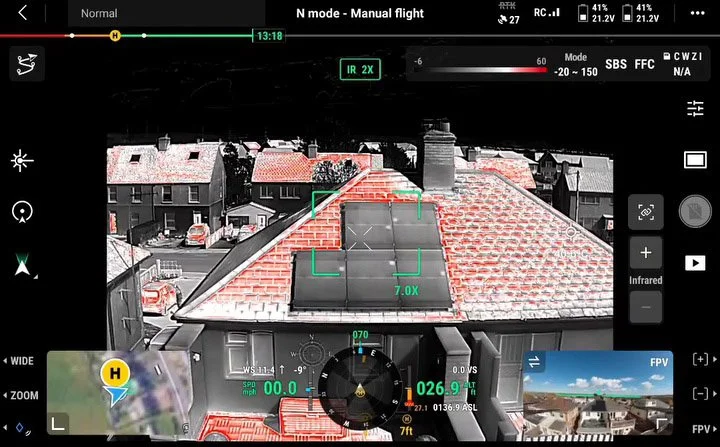
During an inspection
I identified areas where roof slates are missing. These gaps leave the protective layers beneath exposed to the weather, which increases the likelihood of water entering the roof space. Even small openings can lead to damp patches, mould growth, and deterioration of internal ceilings or walls if left unresolved.
Missing tiles also reduce the roof’s ability to withstand wind uplift. This means surrounding tiles become more vulnerable during bad weather, increasing the risk of further losses. In some cases, these openings can also allow birds or small animals to enter the loft space.
Although a single missing tile may appear minor, addressing it promptly helps prevent more extensive damage and avoids higher repair costs in the future.
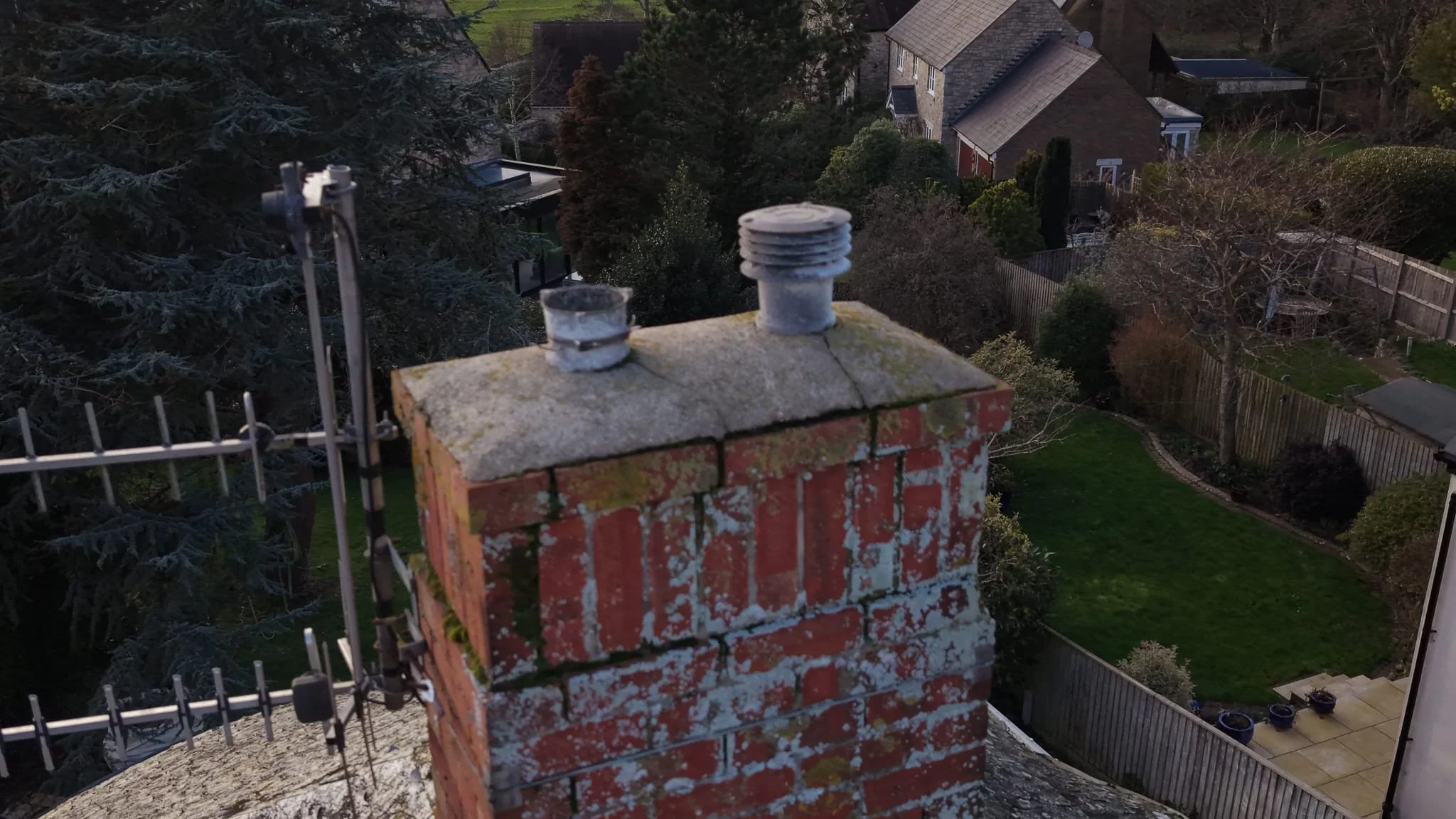
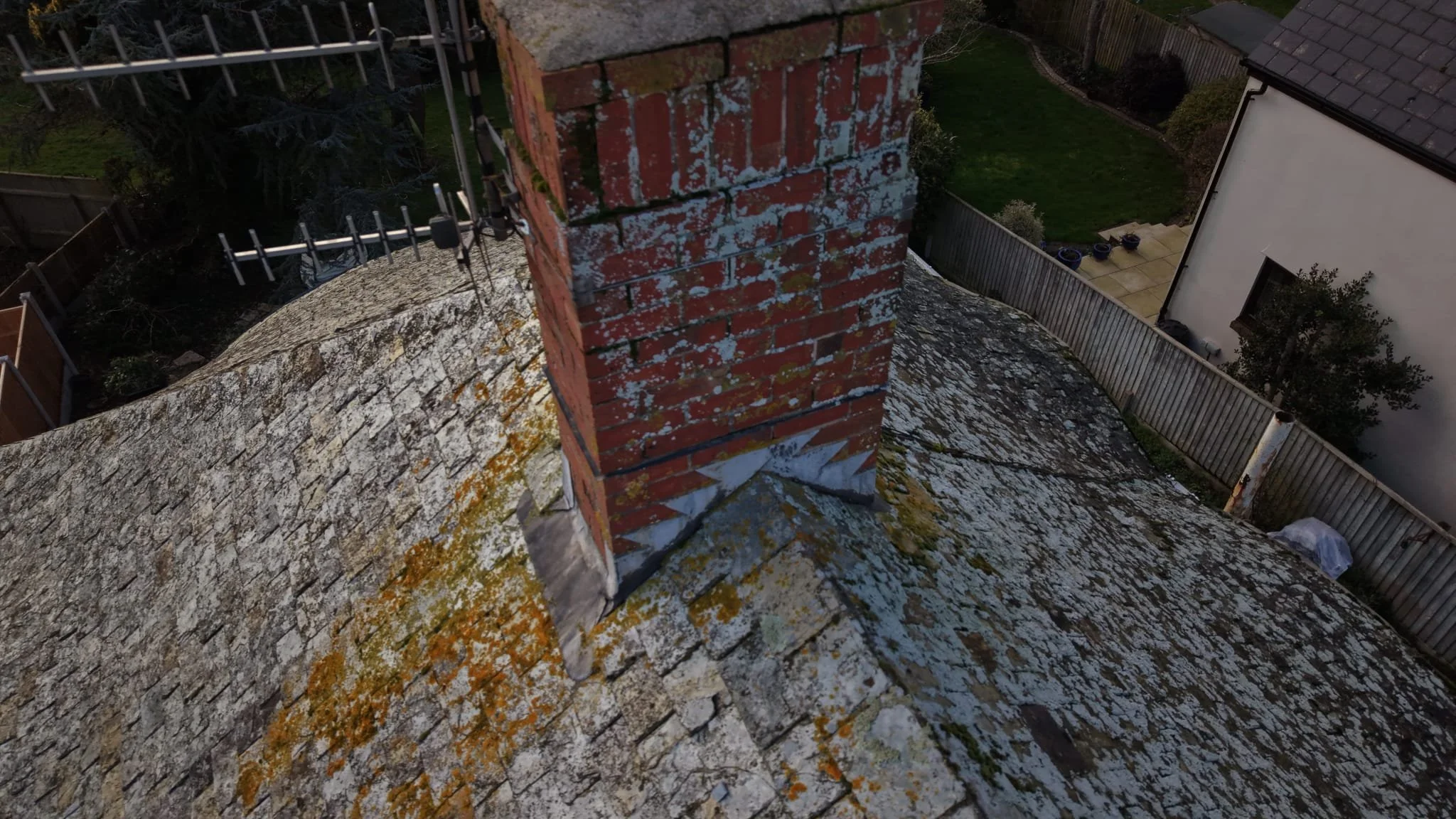
Chimney needs repointing.
Signs Your Chimney May Need Repointing:
Cracked or crumbling mortar
Visible gaps between bricks
Loose bricks
White staining (efflorescence)
Water leaks around the fireplace or chimney base
What to Look for During a
Drone Roof Inspection
1. Missing or Damaged Slate
Look for slate that are cracked, slipped, or completely missing. These areas are vulnerable to water intrusion and can lead to leaks.
2. Loose or Damaged Flashing
Flashing around chimneys, vents, skylights, and valleys should lie flat and be securely sealed. Gaps, rust, or lifting edges can allow water to penetrate.
3. Signs of Water Damage
Dark spots, staining, soft areas, or sagging sections may indicate trapped moisture or underlying structural damage.
4. Ponding Water (Flat Roofs)
Standing water that remains after rainfall can accelerate roof deterioration and increase the risk of leaks.
5. Cracked or Deteriorating Sealant
Sealant around vents, joints, and penetrations should be intact. Cracking or shrinking sealant often signals aging or weather damage.
6. Gutter and Drainage Issues
Clogged, damaged, or improperly pitched gutters can cause water to back up onto the roof, leading to edge damage and fascia problems.
7. Moss, Algae, or Debris Build-Up
Organic growth and accumulated debris trap moisture against the roof surface and can shorten its lifespan.
8. Chimney or Vent Damage
Check for cracked chimney crowns, loose bricks, damaged vent caps, or detached components.
9. Structural Irregularities
Look for sagging ridgelines, uneven roof planes, or visible dips that may indicate framing issues beneath the surface.
10. Storm or Impact Damage
Hail dents, punctures, displaced materials, or debris impact marks should be documented for insurance and repair planning.
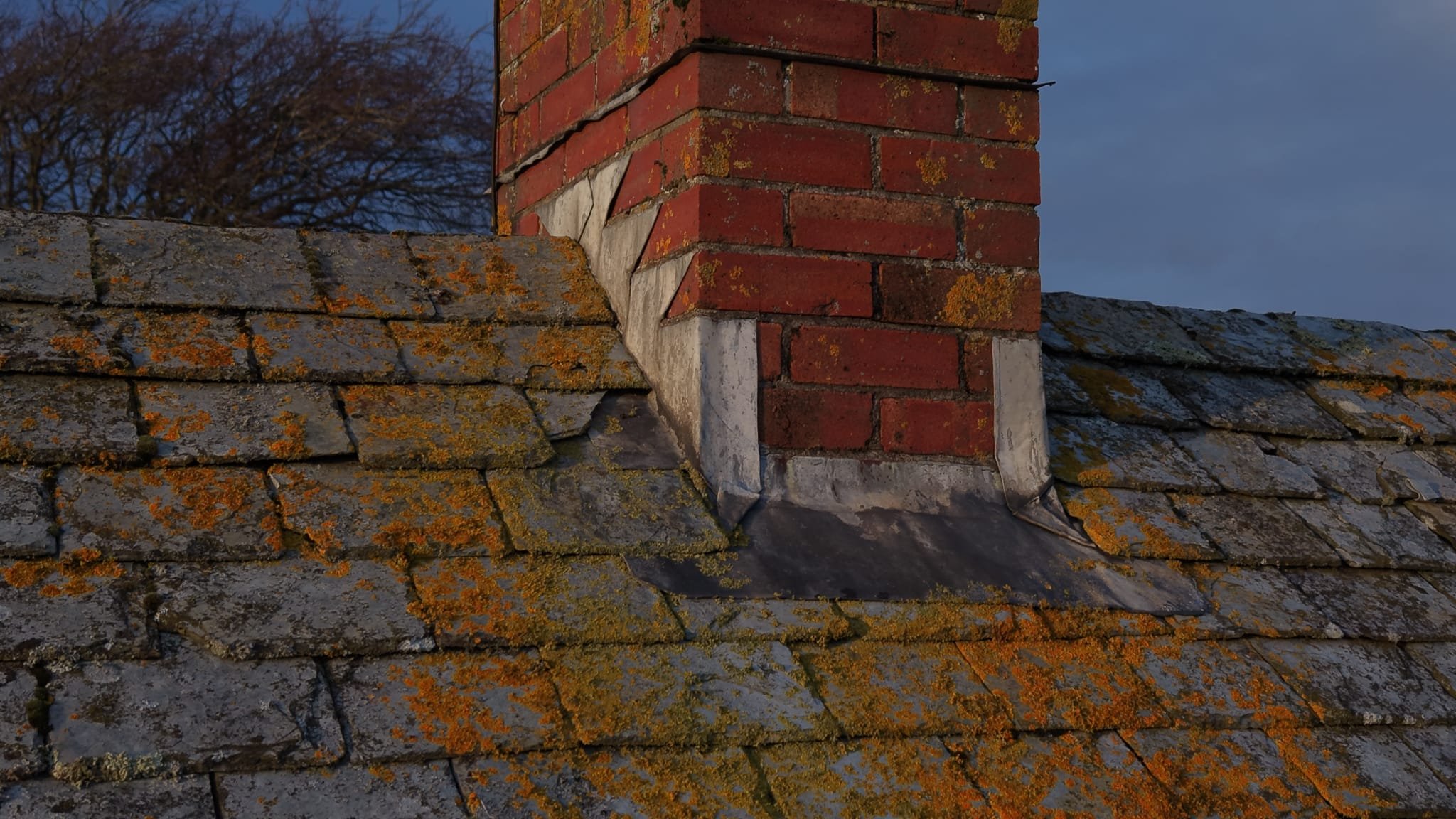
Broken slate on roof
Exposes the roof to water damage, causing damp & mould in the property.
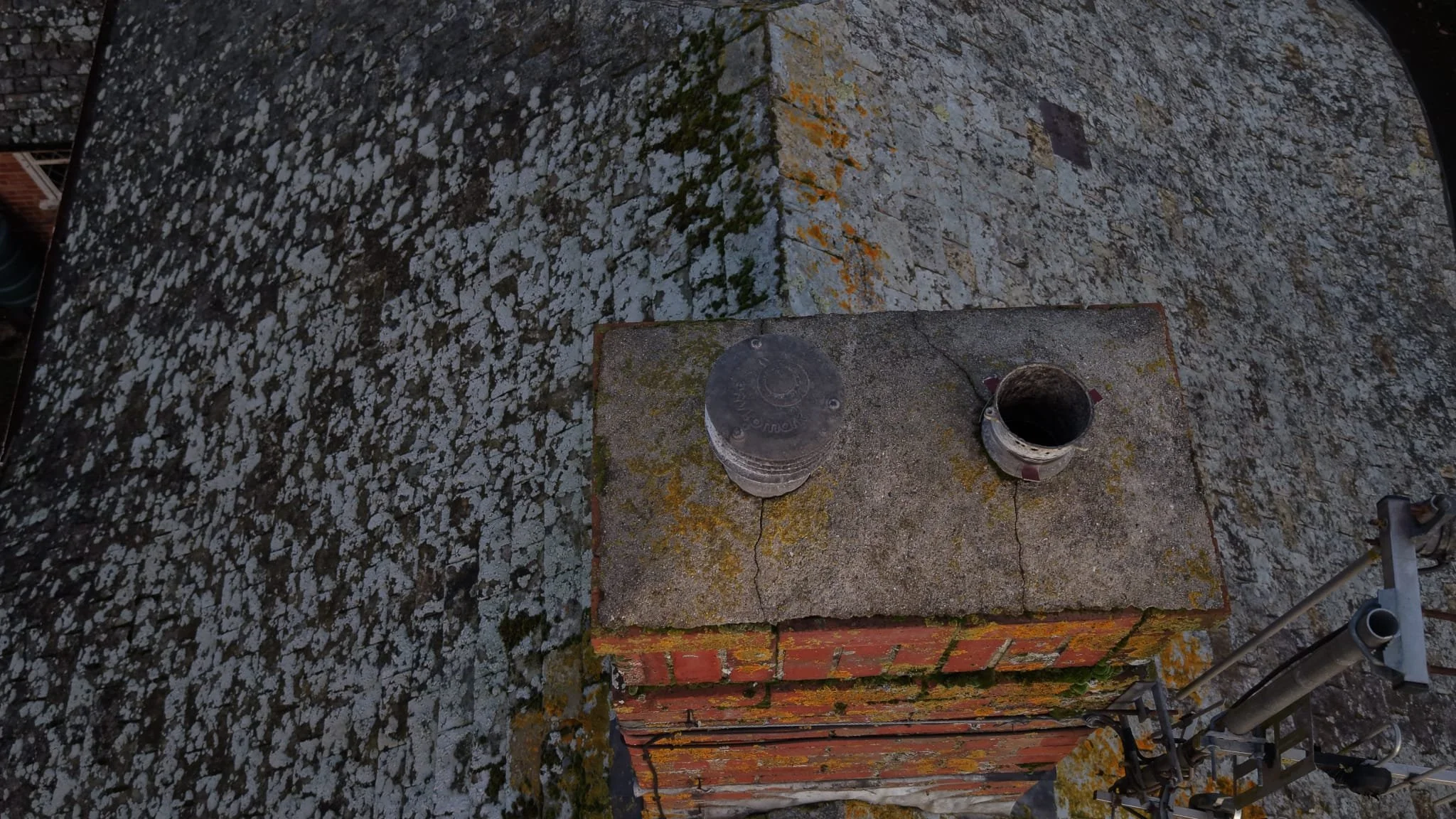
Broken Cowl
Allows birds to get into the chimney stack where they cause a noise nuisance and get stuck in there and die.
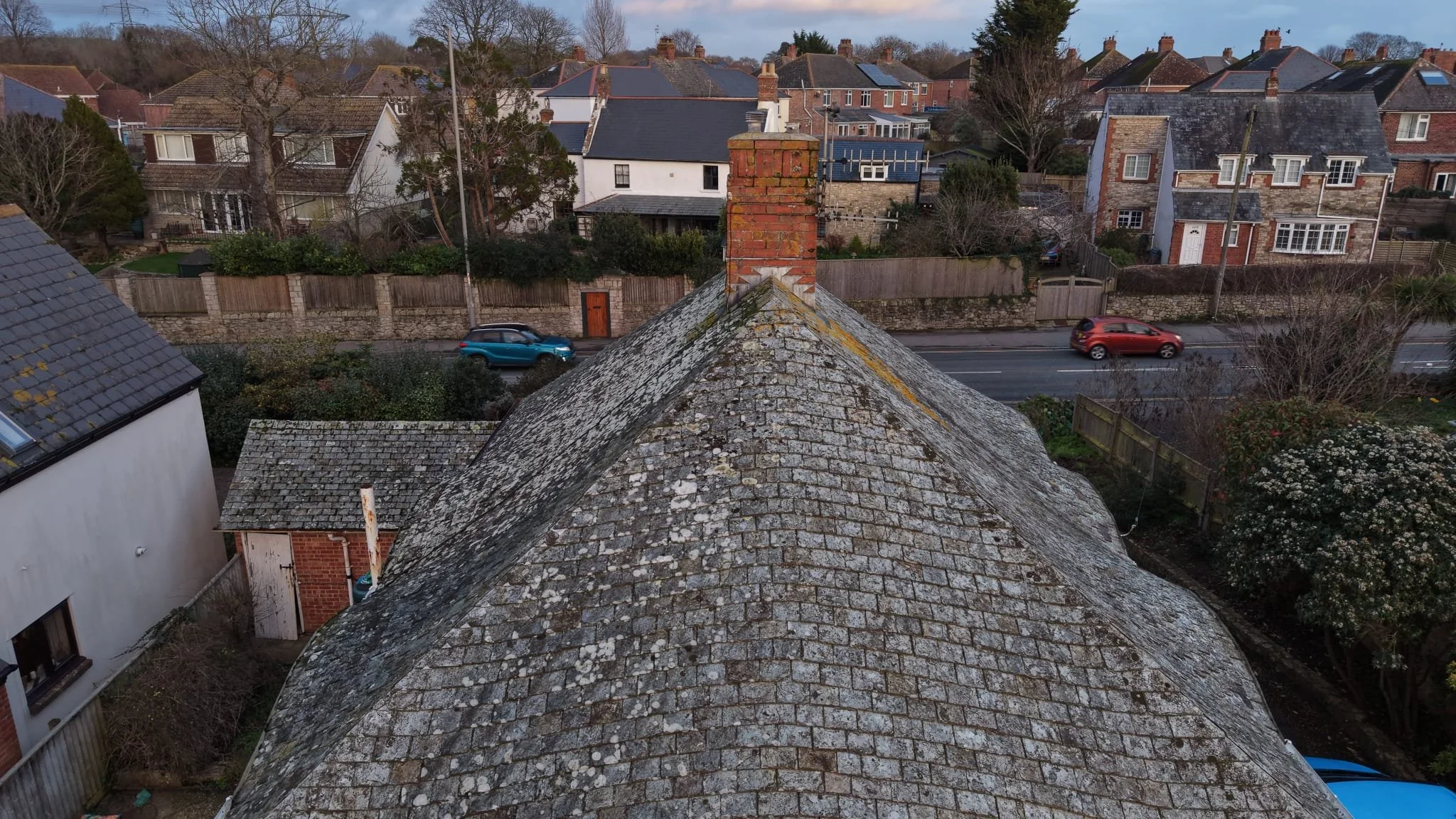
Checking for sagging in the roofline. Sagging can be a sign of rotten rafters that have weakened over time through water penetration.